
Berlin Artist Designs Adversarial Shirt to Cloak Wearers From AI Detection
Simon Weckert developed the patterned garment to evade the YOLO computer vision model amid rising public surveillance concerns.
Key highlights · 2 min read
- A wearable art project aims to blind automated computer vision systems by turning everyday clothing into an optical countermeasure.
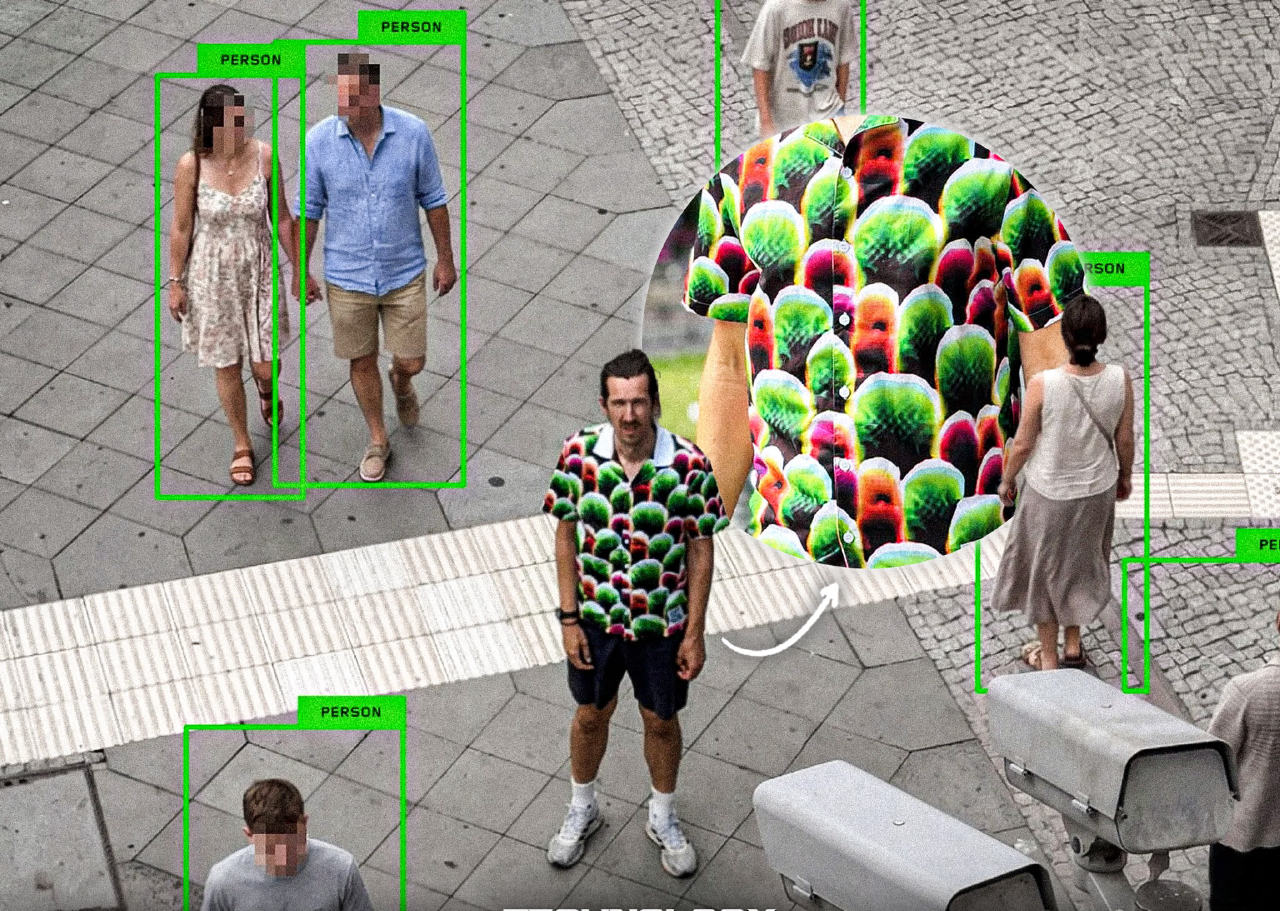
- Titled Digital Camouflage, the garment features an adversarial print refined through iterative evaluations against YOLO, a widely used open-source computer vision model.
- As reported by @technology, Weckert created the garment in response to municipal surveillance discussions in Germany, specifically proposals to deploy au…
 The Scale Report
A wearable art project aims to blind automated computer vision systems by turning everyday clothing into an optical countermeasure. Berlin-based artist Simon Weckert has unveiled a specialized shirt designed to make individuals undetectable to standard object-recognition algorithms.
Titled Digital Camouflage, the garment features an adversarial print refined through iterative evaluations against YOLO, a widely used open-source computer vision model. The design disrupts the visual markers that the model requires to identify a human form, allowing the wearer to walk in front of optical sensors without triggering a person classification tag.
As reported by @technology, Weckert created the garment in response to municipal surveillance discussions in Germany, specifically proposals to deploy automated, AI-assisted video monitoring around Kottbusser Tor in Berlin.
Despite its success in testing environments, the garment has clear limitations as a practical counter-surveillance tool. Demonstrations have only validated its effectiveness against YOLO, leaving it unproven against proprietary commercial platforms, closed government monitoring infrastructure, or multimodal surveillance setups that incorporate thermal imaging and multi-angle tracking.
The project underscores the persistent vulnerability of modern computer vision systems to physical adversarial attacks. Because neural networks rely on specific edge, texture, and pattern hierarchies to classify objects, deliberate disruptions printed in the real world can derail an algorithm's certainty, highlighting ongoing gaps between automated image processing and human perception.
Reporting based on coverage from @technology on Instagram.


