Enes Kanter Freedom Ejected From WNBA Arena Following Clash With Natasha Cloud
The former NBA center was removed by security at Wintrust Arena amid ongoing protests against the league's gender eligibility rules.
Key highlights · 2 min read
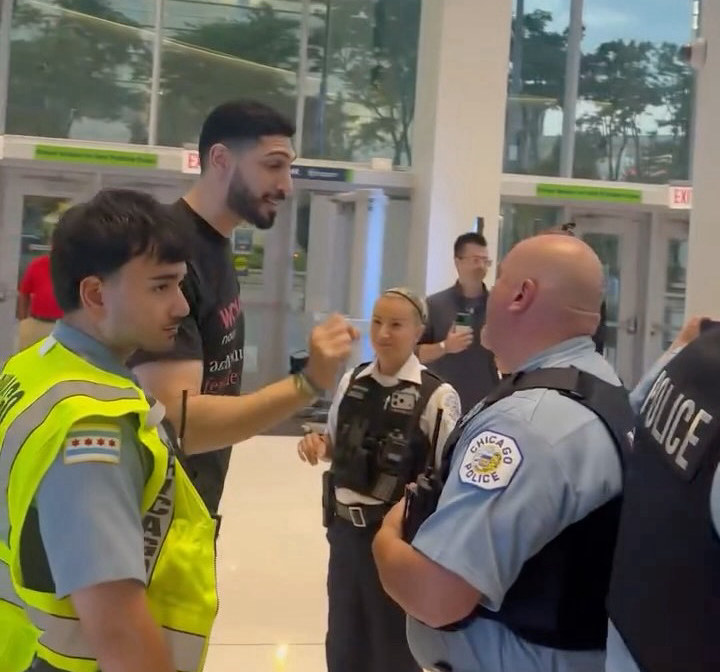
- Former NBA center Enes Kanter Freedom was escorted out of Chicago’s Wintrust Arena on Sunday after an altercation involving Chicago Sky guard Natasha Cloud.
- Freedom, who spent 11 seasons in the NBA before his final appearance in 2022, was stopped by venue security near an entrance concourse and instructed to vacate the facility.
- During the encounter, Freedom wore a shirt emblazoned with the phrase, "Woman noun.
 The Scale Report
Former NBA center Enes Kanter Freedom was escorted out of Chicago’s Wintrust Arena on Sunday after an altercation involving Chicago Sky guard Natasha Cloud.
Freedom, who spent 11 seasons in the NBA before his final appearance in 2022, was stopped by venue security near an entrance concourse and instructed to vacate the facility. Spectators attending the contest, which drew supporters from both the Sky and the visiting Indiana Fever, largely booed the 34-year-old as arena staff ushered him toward the exit.
During the encounter, Freedom wore a shirt emblazoned with the phrase, "Woman noun. Adult human female." When approached by venue personnel, he contested the decision to remove him from the building.
“I’m supporting women, and that is the reason they are kicking me out. That’s unacceptable,” Freedom told arena security staff during the interaction.
Eligibility Disputes and League Rules
The arena confrontation follows several public statements by Freedom challenging the WNBA's current eligibility guidelines. In recent weeks, the veteran athlete claimed intentions to declare for the 2027 WNBA draft by identifying as a woman, targeting the league's structural framework.
League operational rules remain clear on the matter. According to Article XIII, Section 1 (a) of the active WNBA collective bargaining agreement, eligibility requirements state explicitly that "Only players who are women are eligible to play in the WNBA."
As the WNBA navigates historic commercial growth, record-setting broadcast viewership, and upcoming collective bargaining negotiations, arena security and league executives are increasingly forced to manage public disruptions aimed at player operations and identity governance in professional women's sports.
Reporting based on coverage from @frontofficesports.