From Mach 3 Reconnaissance to Flying Wings: The Engineering Behind History's Radical Airframes
A retrospective on the breakthroughs in stealth, aerodynamics, and propulsion that redefined modern aviation.
Key highlights · 2 min read
- For nearly a century, military aerospace development has served as the primary testing ground for extreme mechanical engineering.
- High-altitude, high-speed reconnaissance produced some of the earliest high-risk structural experiments.
- Radar cross-section reduction triggered a separate architectural pivot toward faceted surfaces and tailless flying wings.
 The Scale Report
For nearly a century, military aerospace development has served as the primary testing ground for extreme mechanical engineering. To overcome basic physical limits regarding friction, radar detection, and aerodynamic drag, designers routinely turned to radical structural concepts that challenged conventional aviation orthodoxy.
High-altitude, high-speed reconnaissance produced some of the earliest high-risk structural experiments. Platforms like Lockheed’s A-12 Oxcart and its successor, the SR-71 Blackbird, required titanium fabrication and specialized fuels to endure sustained speeds exceeding Mach 3. Around the same era, the experimental XB-70 Valkyrie tested compression lift with downward-folding wingtips to maintain Mach 3 cruise, though the program was ultimately curtailed due to vulnerability to surface-to-air missile advances.
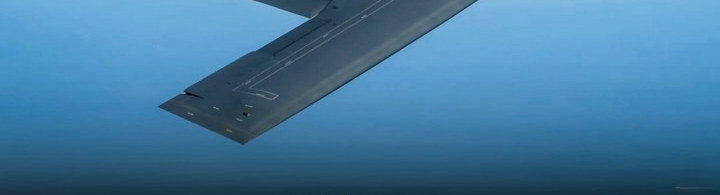
Radar cross-section reduction triggered a separate architectural pivot toward faceted surfaces and tailless flying wings. The introduction of the F-117 Nighthawk demonstrated the viability of flat-panel stealth geometry, while Northrop's B-2 Spirit proved that large flying-wing designs could maintain stability through fly-by-wire flight control computers. That design lineage continues directly into contemporary programs, including the newly introduced B-21 Raider.
Other unconventional platforms targeted lift mechanics and transport utility. The Bell Boeing V-22 Osprey paired turboprop engines with rotating wingtip nacelles to combine helicopter vertical takeoff with fixed-wing cruising speed. In the Soviet Union, the massive Lun-class Ekranoplan bypassed conventional flight altogether, relying on ground-effect aerodynamics to skim meters above the water surface at high speed. Meanwhile, the British Avro Vulcan demonstrated the durability of large delta-wing configurations in early jet-age strategic bombing.
While several of these programs suffered from extreme budget overruns, maintenance complexity, or operational cancellation, their legacy extends beyond defense. The structural materials, computational fluid dynamics, and advanced fly-by-wire architectures developed to keep these machines airborne remain foundational to modern commercial aviation and next-generation autonomous flight systems.
Reporting based on coverage from @technology on Instagram.