
How Sovereign Constraints Are Shaping the Next Generation of Infrastructure
From Dutch flood management to Gulf solar megaprojects, severe environmental pressures continue to drive distinct engineering doctrines.
Key highlights · 2 min read
- Geographic and environmental constraints have long acted as sovereign catalysts, compelling nations to build specialized engineering systems that eventually evolve into global infrastructure models.
- Energy infrastructure demonstrates this divergence clearly.
- Resource scarcity has driven equally aggressive deployments in arid regions.
 The Scale Report
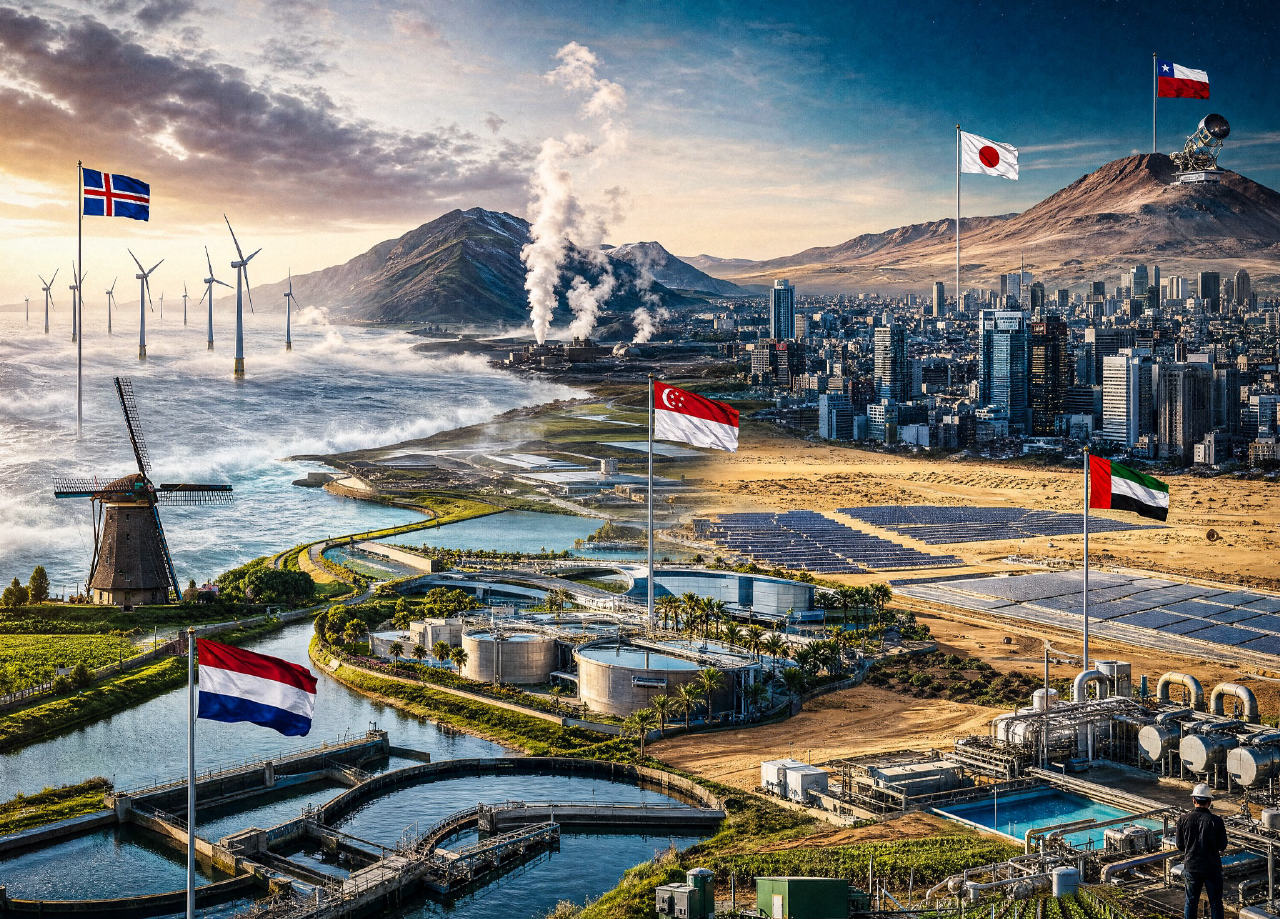
Geographic and environmental constraints have long acted as sovereign catalysts, compelling nations to build specialized engineering systems that eventually evolve into global infrastructure models. Across energy, civil defense, and resource management, necessity has forced governments to test technologies at a scale rarely attempted in less challenging environments.
Energy infrastructure demonstrates this divergence clearly. In Iceland, volcanic geology has been harnessed so extensively that geothermal power now supplies approximately 90 percent of all residential heating. Denmark followed a parallel path with renewable power, turning relentless coastal gales into an industrial wind ecosystem that now generates roughly half of the country's electricity.
Water and Solar Deployment at Scale
Resource scarcity has driven equally aggressive deployments in arid regions. Dubai has scaled its flagship solar park to 3,860 megawatts of capacity, with official targets aiming to surpass 8,000 megawatts before 2030. In water-stressed territories, circular recycling has become critical: Israel currently reclaims more than 85 percent of its treated wastewater, while Singapore relies on a synchronized tripartite network of advanced rainwater catchment, industrial recycling, and desalination.
Similar pressures have dictated civil engineering standards in disaster-prone regions. Japan has institutionalized advanced seismic dampening and architectural resilience directly into its structural building codes, while the Netherlands reshaped its flood defenses by deliberately expanding river basin capacity rather than relying solely on rigid dikes.
Beyond civil defense, geographic isolation and extreme terrain have fostered specialized public sectors. Chile has capitalized on the ultra-dry, high-altitude conditions of the Atacama Desert to host a dominant share of global astronomical research, while Estonia responded to early institutional vulnerabilities by moving 100 percent of its public administrative services into a digital-first architecture.
What begins as localized survival engineering routinely matures into exportable technology and strategic intellectual property. As shifting climate conditions place unprecedented strain on legacy utility grids and municipal resources worldwide, these national testbeds offer a clear look at the defensive systems broader markets will inevitably be forced to adopt.
Reporting based on coverage from @technology on Instagram.


