Inventist unveils SHANE, a two-wheeled five-passenger electric vehicle concept
The radical design relies on active cabin weight shifting and massive 60-inch wheels instead of conventional steering
Key highlights · 2 min read
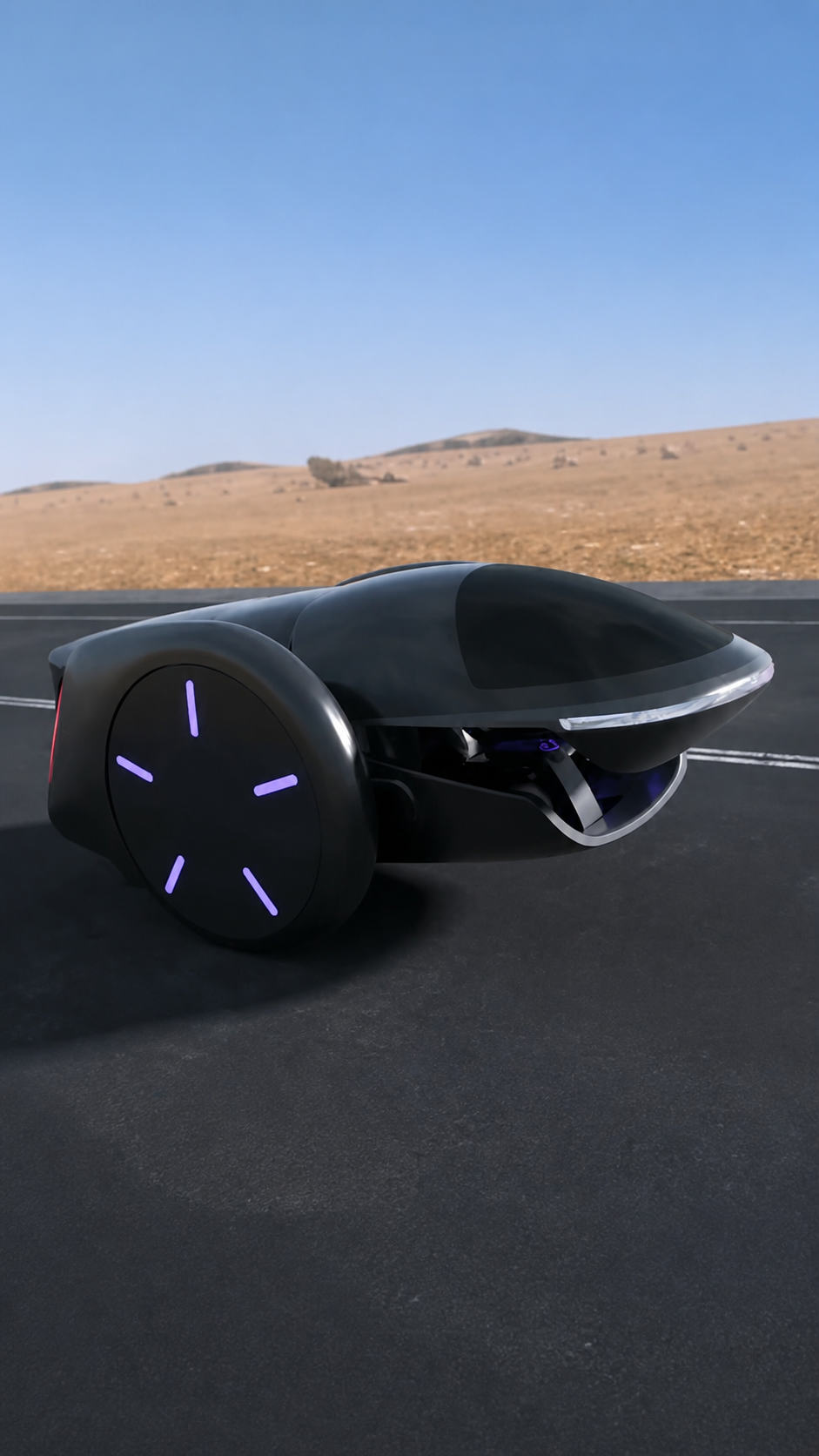
- Inventist has introduced a novel electric vehicle concept named SHANE, designed to seat five passengers while balancing entirely on two oversized parallel wheels.
- Rather than relying on a traditional four-wheel chassis and mechanical steering rack, the concept operates through differential wheel drive, adjusting the speed of each wheel independently to chang…
- The vehicle is designed with 60-inch wheels, which the company claims would provide smoother traversal over road imperfections and allow for zero-radius turns in tight spaces.
 The Scale Report
Inventist has introduced a novel electric vehicle concept named SHANE, designed to seat five passengers while balancing entirely on two oversized parallel wheels.
Rather than relying on a traditional four-wheel chassis and mechanical steering rack, the concept operates through differential wheel drive, adjusting the speed of each wheel independently to change direction. To maintain stability during acceleration and braking, the passenger cabin actively shifts its center of gravity forward and backward along an internal track.
The vehicle is designed with 60-inch wheels, which the company claims would provide smoother traversal over road imperfections and allow for zero-radius turns in tight spaces. Inventist also proposes incorporating a regenerative suspension system capable of harvesting kinetic energy from road bumps to supplement the battery.
At present, SHANE remains strictly a digital design study. The company has not built a physical prototype or released verified technical specifications regarding battery capacity, curb weight, highway handling, or crash protection.
While unconventional mobility concepts regularly surface from independent design labs, scaling a two-wheeled self-balancing platform into a road-legal passenger car faces steep practical hurdles. Meeting modern motor vehicle safety standards, managing side-impact collisions, and ensuring fail-safe operations during high-speed sensor or motor failures have historically kept gyroscopic and two-wheeled designs confined to low-speed micromobility.
Reporting based on coverage from @technology on Instagram.