Northwestern Engineers Design High-Speed Phantom Twist Drone
Researchers at Northwestern University developed an AI-optimized drone that spins at high speeds to become nearly invisible during flight.
Key highlights · 2 min read
- Northwestern University engineers have unveiled a prototype drone that utilizes rapid rotation to achieve a high degree of visual concealment.
- The team utilized artificial intelligence to refine the structural composition of the aircraft.
- During experimental trials conducted by the Northwestern University engineers, the drone demonstrated a significant reduction in detectability.
 The Scale Report
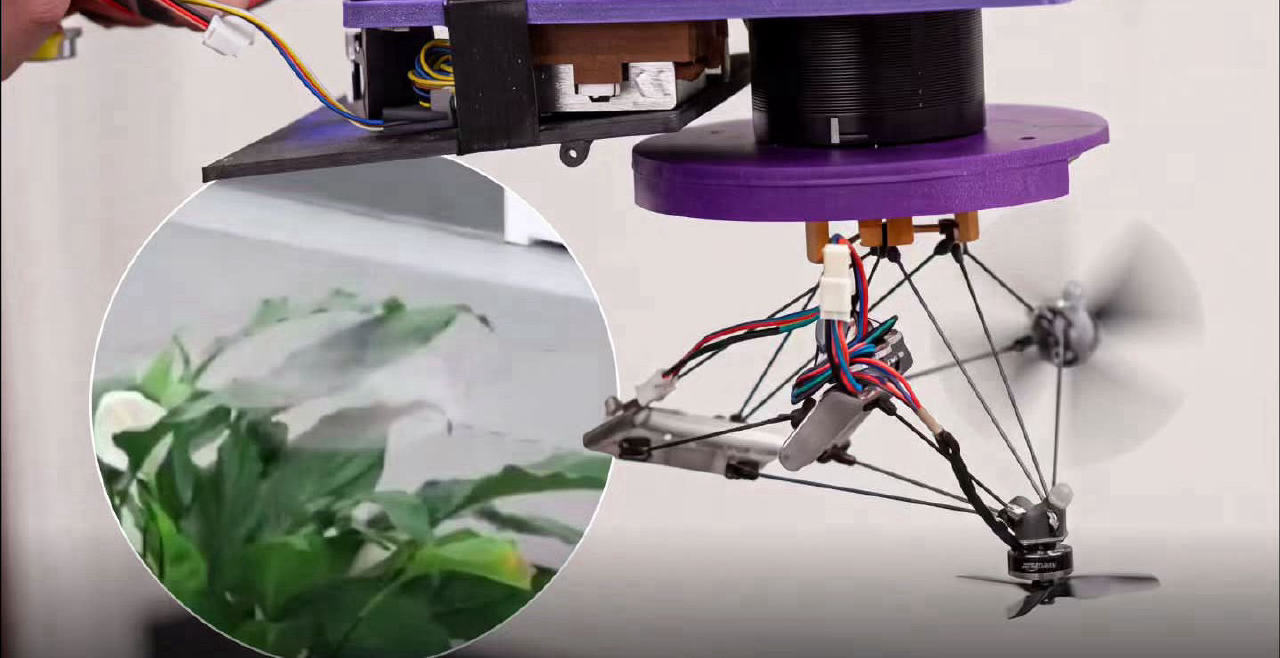
Northwestern University engineers have unveiled a prototype drone that utilizes rapid rotation to achieve a high degree of visual concealment. Known as the Phantom Twist, the aerial vehicle functions by spinning its primary chassis at a rate of 25 rotations per second in the opposite direction of its propeller. This mechanical counter-motion stabilizes the device while turning its physical silhouette into a faint, translucent blur.
Computational Design Process
The team utilized artificial intelligence to refine the structural composition of the aircraft. By simulating thousands of potential configurations for core components like motors and batteries, the research team optimized the Phantom Twist to balance flight stability with its unique visual profile. The Scale Report notes that the use of iterative machine learning models has become a standard practice for optimizing aerodynamic efficiency in novel drone designs.
Combatting Visual Detection
During experimental trials conducted by the Northwestern University engineers, the drone demonstrated a significant reduction in detectability. Results indicated that the spinning aircraft was approximately 10 times less visible than a standard quadcopter configuration. While the current iteration of the drone does not provide total invisibility, researchers believe subsequent design iterations could further decrease the craft's radar or visual signature.
This development highlights the ongoing arms race in drone technology, where low observability is increasingly prioritized for specialized applications. By shifting focus from traditional camouflage toward kinetic visual disruption, the engineers have bypassed some of the weight and material limitations typically associated with stealth technology.
Reporting based on coverage from @evolving.ai on Instagram.