Photo App Retro Secures $21 Million Series A at Nine-Figure Valuation
The ad-free platform, founded by former Instagram engineers, looks to capitalize on growing fatigue with algorithmic feeds.
Key highlights · 2 min read
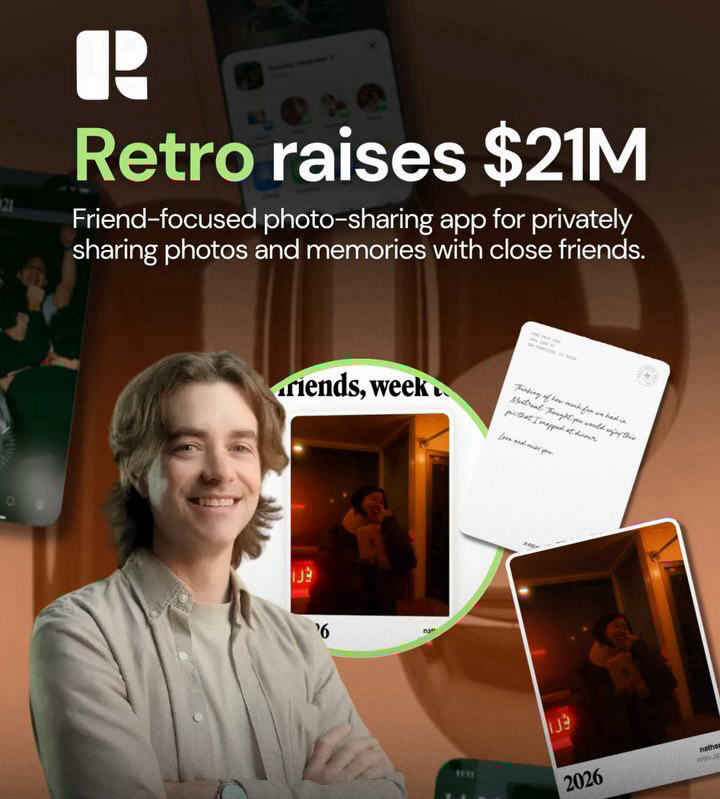
- Retro has closed a Series A funding round exceeding $21 million, lifting the photo-sharing startup's valuation above the $100 million mark, according to regulatory filings and data from PitchBook.
- The New York-based platform was launched in 2023 by former Instagram product engineers Nathan Sharp and Ryan Olson.
- Retro operates on a private-first architecture, allowing users to circulate photos among direct friends, curate shared albums, and revisit personal archives.
 The Scale Report
Retro has closed a Series A funding round exceeding $21 million, lifting the photo-sharing startup's valuation above the $100 million mark, according to regulatory filings and data from PitchBook.
The New York-based platform was launched in 2023 by former Instagram product engineers Nathan Sharp and Ryan Olson. The pair set out to build a streamlined network centered around close relationships rather than mass-market broadcast feeds.
Subscriptions Over Ads
Retro operates on a private-first architecture, allowing users to circulate photos among direct friends, curate shared albums, and revisit personal archives. In a distinct departure from the advertising-heavy playbook popularized by Meta, the company rejects brand-sponsored placements and instead monetizes directly through user subscriptions.
The funding round attracted a wide syndicate of venture firms and high-profile tech operators. Backers include Thrive Capital, Scribble Ventures, BoxGroup, Imaginary Ventures, Coalition, Conviction, Copper, Positive Sum, and Figma chief executive Dylan Field.
The Wider Bet on Social Unbundling
The sizable capital injection underscores an enduring venture appetite for social utilities that push back against algorithmic engagement loops. While consumer social platforms reliant on paid tiers have historically faced steep retention curves against free, ad-supported incumbents, rising consumer frustration with feed bloat and public performance culture continues to open small but lucrative niches for private media networks.
Reporting based on coverage from @tradedvc on Instagram.