South Korea Scales Dense Urban Automation Across Seoul's Civic Infrastructure
Municipal deployments combine digital twins, autonomous transit, and robotic networks to reshape metropolitan operations.
Key highlights · 2 min read
- South Korea is embedding automated systems and civic robotics into everyday urban infrastructure at an unprecedented scale.
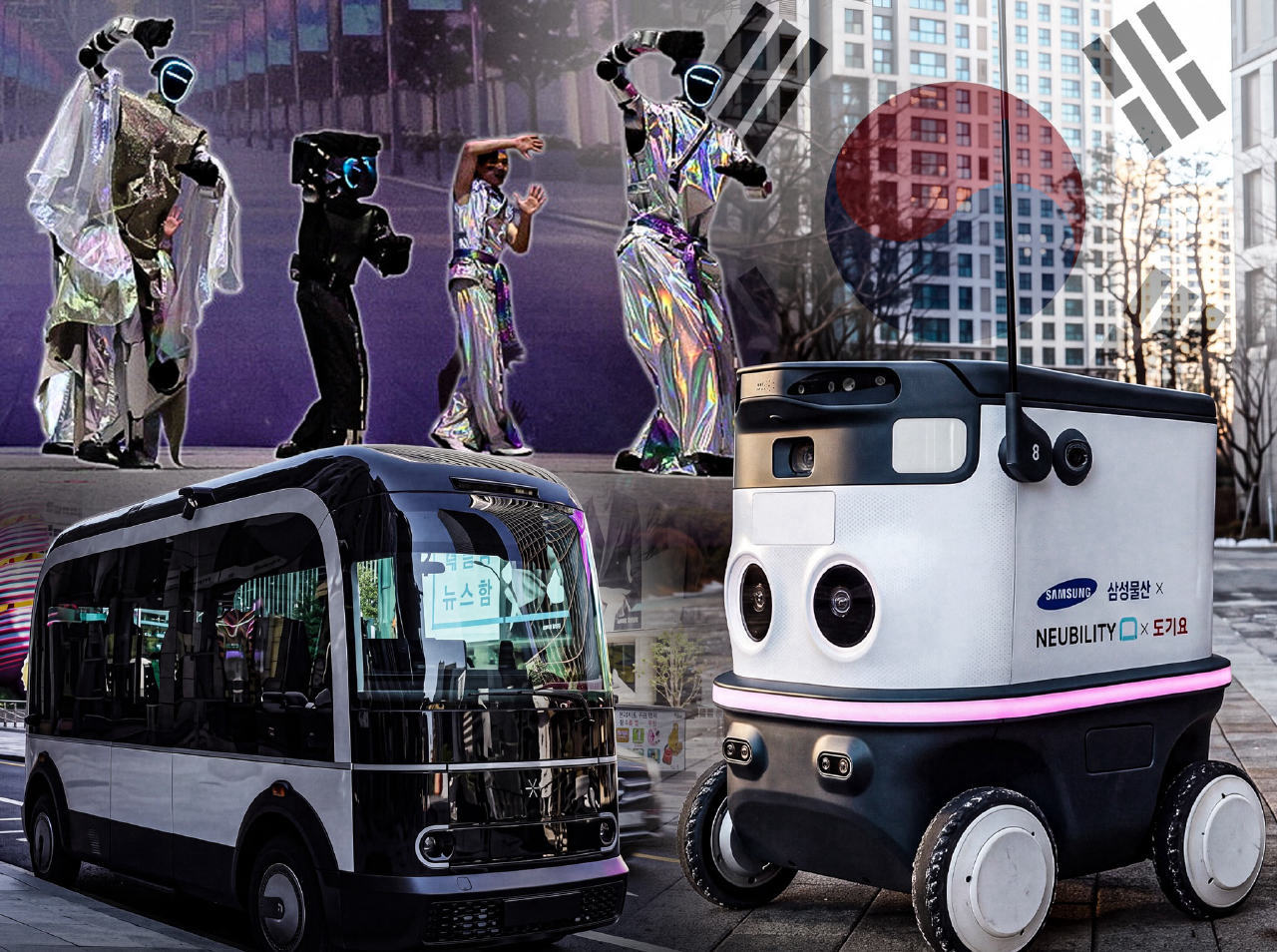
- At the street level, the rollout spans automated valet parking systems, doorstep robot couriers, and driverless shuttles engineered entirely without manual steering controls.
- The physical automation is backed by extensive digital monitoring.
 The Scale Report
South Korea is embedding automated systems and civic robotics into everyday urban infrastructure at an unprecedented scale. Across Seoul and surrounding metropolitan districts, municipal programs are transitioning experimental automation into routine public utility, covering everything from subterranean sanitation to high-speed transit.
At the street level, the rollout spans automated valet parking systems, doorstep robot couriers, and driverless shuttles engineered entirely without manual steering controls. Intercity connectivity is simultaneously being upgraded through Great Train eXpress (GTX) routes capable of operating at 180 kilometers per hour, complemented by underground pneumatic waste networks designed to bypass surface-level collection.
Data Networks and the 605-Square-Kilometer Model
The physical automation is backed by extensive digital monitoring. Seoul’s municipal administration maintains a 605-square-kilometer digital twin of the capital to model urban planning and traffic flows. For public safety, an opt-in surveillance architecture centralizes feeds from roughly 110,000 connected cameras, while street-level hardware - such as illuminated smart crosswalks designed for distracted smartphone users and weight-based RFID food-waste disposal bins - manages pedestrian movement and residential refuse.
Transit hubs and commercial venues are seeing comparable upgrades. Incheon International Airport has integrated facial recognition checkpoints to expedite passenger processing, while specialized entertainment facilities - including a newly opened 16,500-square-meter robotics park hosting synchronized humanoid demonstrations - are designed to acclimate the public to interacting with autonomous machines.
A Demographic Hedge Disguised as Civic Tech
South Korea's aggressive modernization push functions as both an export showcase for domestic conglomerates like Samsung C&T and Hyundai Motor Group, and an urgent response to domestic pressures. Facing steep demographic contraction and a rapidly graying workforce, municipal automation serves less as a futuristic novelty and more as a baseline operational requirement to sustain civic services amid a shrinking labor supply.
Reporting based on coverage from @technology on Instagram.