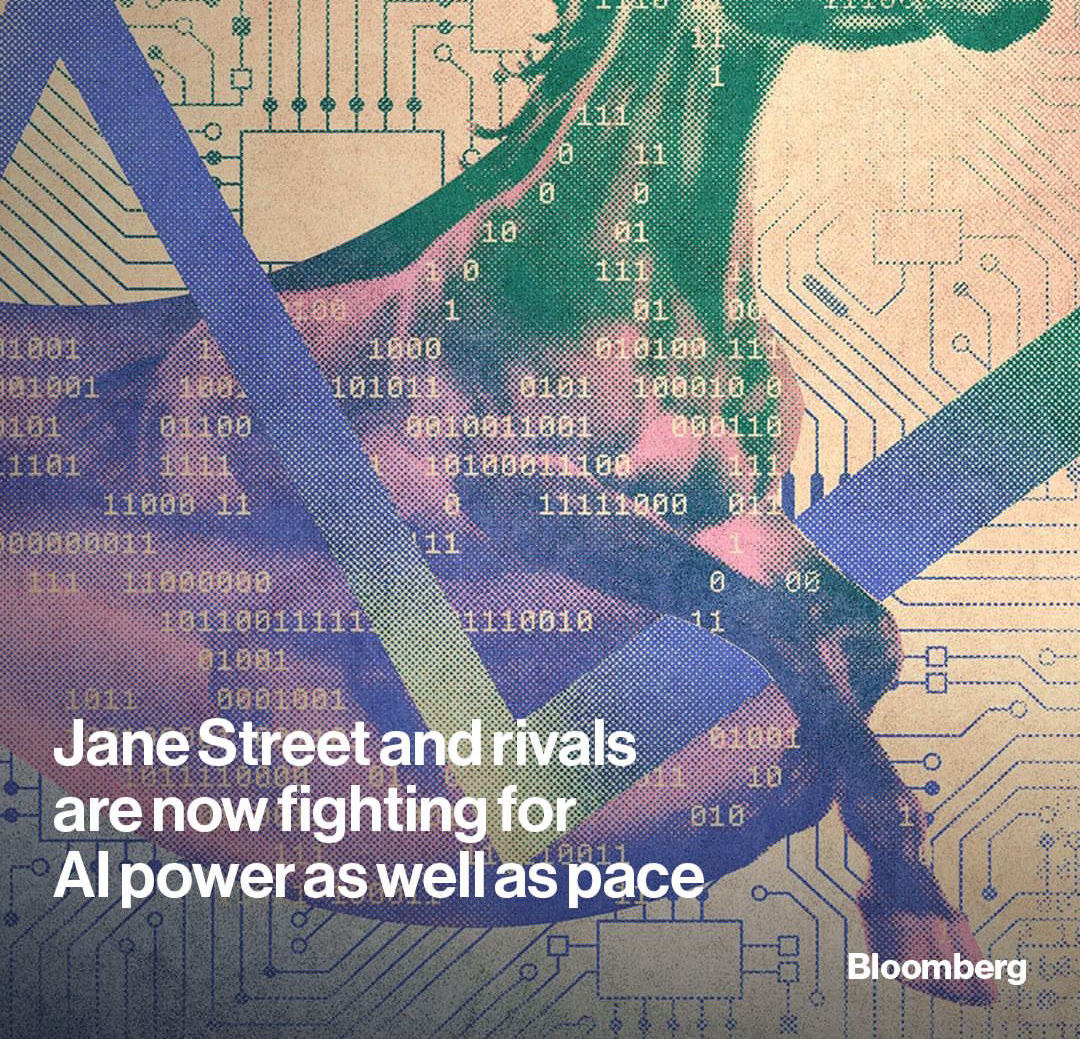
Wall Street High-Frequency Traders Chase AI Infrastructure
Investment firms are aggressively pursuing expensive AI computing power to remain competitive, though the payoff remains uncertain.
Key highlights · 2 min read
- Wall Street high-frequency traders are entering an aggressive arms race to secure access to AI computing power as they struggle to keep pace with industry rivals.
- Despite billions of dollars currently flowing into AI hardware and software stacks, the path to profitability remains obscured.
- The obsession with AI compute represents a broader shift in quantitative finance where latency is no longer the only variable for success.
 The Scale Report
Wall Street high-frequency traders are entering an aggressive arms race to secure access to AI computing power as they struggle to keep pace with industry rivals. These firms are committing significant capital to infrastructure projects that promise to accelerate trade execution and predictive modeling, yet there is no assurance these expenditures will yield a meaningful performance advantage. The Scale Report understands that the financial sector views this pivot toward heavy compute as a mandatory, if risky, evolution of the modern trading floor.
The Cost of Staying Competitive
Despite billions of dollars currently flowing into AI hardware and software stacks, the path to profitability remains obscured. Trading firms are discovering that the sheer cost of training and maintaining proprietary models requires a scale of resources that pushes traditional profit margins to their limits. According to reporting from Bloomberg Business, the reliance on specialized silicon has become the new benchmark for institutional relevance.
Why Market Relevance Matters
The obsession with AI compute represents a broader shift in quantitative finance where latency is no longer the only variable for success. As algorithms become more complex, firms need massive throughput to process non-traditional data streams in real time. The primary danger for these organizations is the potential for sunk cost, where firms commit heavily to infrastructure that fails to produce faster or more accurate signals than existing, legacy systems.
Reporting based on coverage from @bloombergbusiness on Instagram.