Nvidia Strikes $7 Billion Deal With AI Coding Startup Poolside Across Licensing and Equity
The agreement pairs a $6 billion tech license with a $1 billion direct investment, onboarding over 100 staff while founders keep the startup independent.
Key highlights · 2 min read
- Nvidia is deploying $7 billion across a multi-part transaction with AI software development startup Poolside, combining a massive intellectual property licensing agreement with direct venture funding.
- Under the terms of the arrangement, the Santa Clara-based chipmaker is paying $6 billion for a non-exclusive license to Poolside's proprietary Model Factory system.
- The agreement also features an extensive talent absorption mechanism.
 The Scale Report
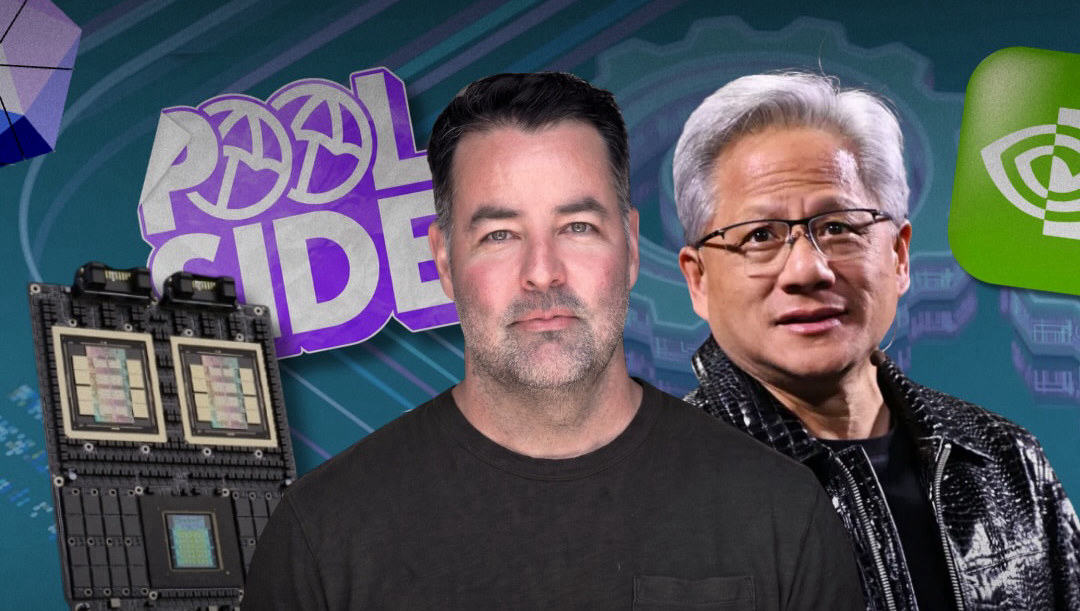
Nvidia is deploying $7 billion across a multi-part transaction with AI software development startup Poolside, combining a massive intellectual property licensing agreement with direct venture funding.
Under the terms of the arrangement, the Santa Clara-based chipmaker is paying $6 billion for a non-exclusive license to Poolside's proprietary Model Factory system. Alongside the licensing deal, Nvidia is investing $1 billion directly into Poolside, pricing the startup at a $12 billion pre-money valuation.
Talent Transfer and Liquidity
The agreement also features an extensive talent absorption mechanism. Nvidia is extending employment offers to 109 Poolside personnel, pulling significant engineering capacity into its own ranks to bolster internal developer tools and model training pipelines.
Despite the staff migration and technology licensing, Poolside will remain an operating business. Chief executive Eiso Kant and his two fellow co-founders will continue leading the independent company with the newly secured capital. The structure also outlines a scheduled $6 billion payout to Poolside's existing investors, targeted for distribution before the end of 2027.
Bypassing Traditional M&A
The unconventional structure mirrors recent maneuvers by other tech giants, such as Microsoft with Inflection and Amazon with Adept. By assembling a package of non-exclusive licensing, large investor payouts, and selective talent acquisition instead of an outright buyout, hyperscalers can rapidly secure critical AI assets while minimizing the risk of antitrust intervention.
Reporting based on coverage from @tradedvc on Instagram.